madeby.studio
use cookies and related technologies to give you the
best online experience. Strictly necessary cookies are
on
by default. Additional cookies are
off
by default.
People tend to think of paper recycling, tote bags for life, greener supply chains or electric cars. All of these matter, of course, but there’s also a whole world of sustainability most people don’t see. It lives in our websites, apps and digital services.
Welcome to digital sustainability.
At its simplest, it means creating online experiences that are efficient, accessible and kinder to the planet. It focuses on reducing energy used by digital products, improving performance, avoiding waste and supporting ethical, inclusive digital behaviour.
In short, it’s about designing responsibly.
Cleaner code. Smaller files. Greener hosting.
More honest design choices. Better outcomes for users and the world we share.
Why Digital Sustainability matters
Digital might feel weightless, but it isn’t impact free. Storing, sending and processing data uses energy, and that energy has a carbon cost. Research from the Green Software Foundation suggests that digital activity accounts for around 4-5% of global emissions. That’s similar to aviation, shipping, and rail travel combined and it’s increasing as streaming, AI tools and connected devices become part of everyday life.
All of this means digital sustainability has real potential to make a positive difference, simply by improving the tech we use every day.
It isn’t just about carbon
Energy use is important, but sustainable digital products goes further than efficient hosting or lighter code. The Web Sustainability Guidelines (W3C) highlight that sustainability also includes:
Performance
Accessibility
Longevity
Responsible infrastructure
Put simply, the most sustainable digital products are:
faster for everyone
more accessible for everyone
built to last
created with thoughtful technical choices
These approaches make digital products more ethical, enjoyable and efficient.
How can teams make digital products more sustainable?
You don’t need a complete tech overhaul to make progress. Small, thoughtful decisions can have a big impact. Here are some practical starting points:
Use fewer, better assets
Images and videos shouldn’t be large just because they can be. Compress, optimise and make every asset count.
Avoid technical bloat
Heavy scripts, unnecessary plugins and overcomplicated frameworks slow down users and use more energy. Leaner code is better for everyone.
Build to evolve, not replace
A flexible, maintainable system lasts longer than something rebuilt every year, saving time, effort and resources.
Choose green hosting
Look for providers running on renewable energy. Tools like The Green Web Foundation directory make it easy to check. madeby.studio is also one of the accredited sustainable hosting providers, so our clients automatically benefit from greener hosting.
Use video sparingly
Video can tell a powerful story, but it’s also one of the heaviest forms of media online. Use it where it adds value, not just for decoration, and compress or stream responsibly.
Avoid unnecessary stock imagery
If imagery doesn’t help users understand or do something, it’s visual noise that slows everything down. Choose purposeful visuals or custom assets that add real value to the experience.
Treat accessibility as essential
Inclusive design isn’t just the right thing to do. It also reduces rework and improves performance for all users.
Let’s talk honesty about greenwashing
Digital sustainability isn’t a badge or a marketing statement. Planting trees doesn’t make a slow, inefficient website sustainable. Real sustainability is measured, maintained and continuously improved, with attention to performance, accessibility, energy use and long-term value.
How we approach it at madeby.studio
Sustainability isn’t a separate service or optional add-on for us. It shapes how we design, build, host and maintain everything we create. Some of the ways it guides our work include:
Responsible hosting – all sites run on renewable energy through accredited providers.
Performance and accessibility – lightweight builds, fast content delivery and inclusive design are standard.
Building to last – modular, maintainable systems reduce waste and rework.
Working with clients – we approach sustainability as a collaborative conversation, making choices together.
A great example is our work on DaltonLIDP, which was all about decarbonisation. We designed and built a website that reflected the project’s values: optimised for efficiency, hosted on green servers, and built to be lightweight, accessible and easy to maintain. The project was even featured on LowwwCarbon for its focus on digital sustainability.
Great digital products should be functional, ethical and efficient. That’s how digital becomes better for everyone.
The future of digital is efficient
As awareness grows and regulations catch up, sustainable design will become the norm rather than a differentiator. The most successful digital products will be fast, fair, resilient and built for the long term.
Digital sustainability isn’t a trend. It’s a responsibility. And the best time to build better is now.
FAQs about digital sustainability
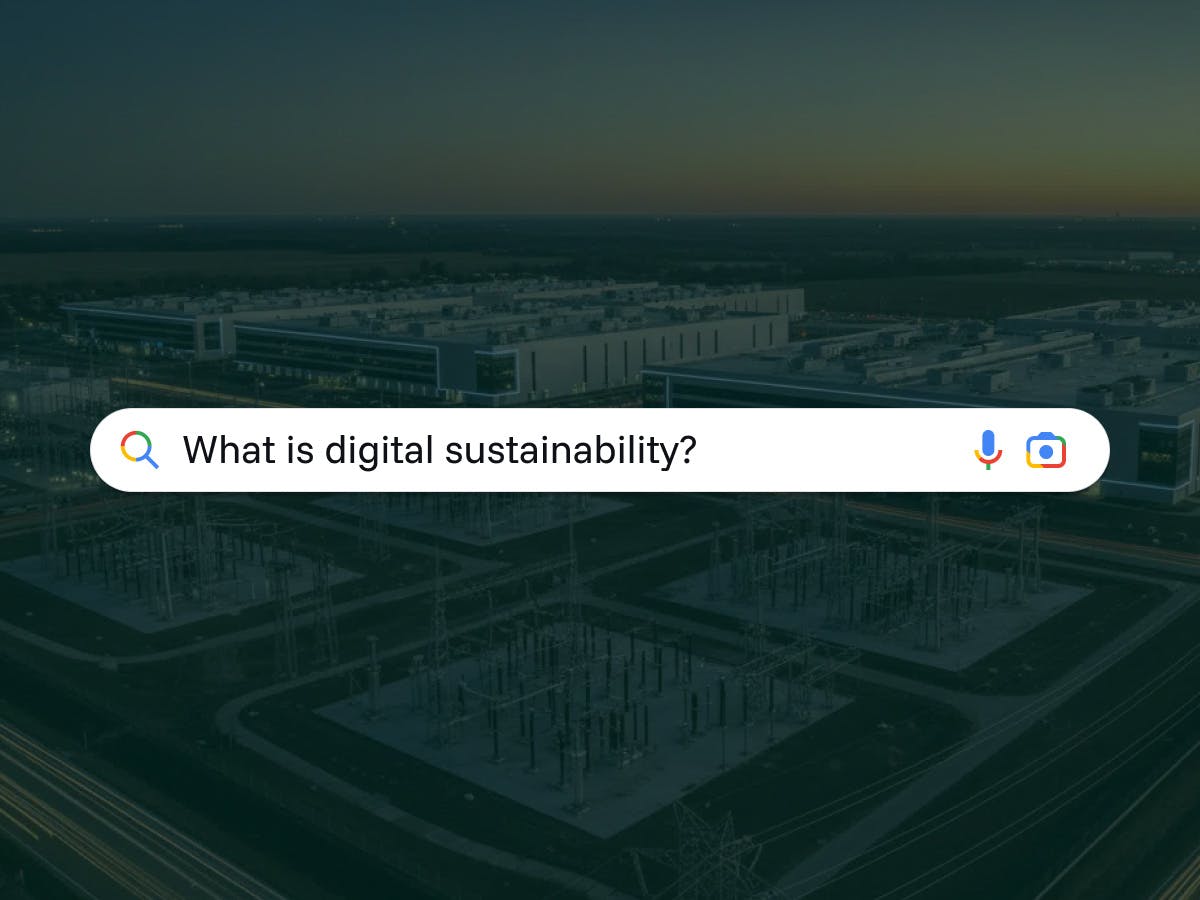
What is digital sustainability?
Digital sustainability means designing and maintaining digital products that minimise energy use, improve accessibility and are built to last. It focuses on reducing digital waste at every stage, from strategy and design to development and hosting, so platforms perform efficiently over the long term.
Why does digital sustainability matter?
Websites and digital services use energy every time data is stored, processed or transferred. As digital use grows, improving efficiency and performance can significantly reduce carbon impact while also lowering costs and improving user experience.
How can websites reduce their carbon footprint?
By optimising assets, using green hosting, improving performance and avoiding unnecessary features. Leaner code, compressed media and thoughtful user journeys all reduce energy use while supporting faster load times and stronger conversion.
Is digital sustainability only about hosting?
No. It includes performance, accessibility, UX decisions, infrastructure and long-term maintainability. Hosting is one part of the equation, but real impact comes from designing and building platforms that are efficient from the ground up.
Is green hosting enough?
Green hosting helps, but true digital sustainability also includes performance optimisation, accessibility, thoughtful UX and avoiding technical bloat. Without addressing these factors, a site may still waste energy and underperform, even on renewable infrastructure.
Is digital sustainability just for large organisations?
Not at all. Small teams can make meaningful improvements through simple steps like compressing images, removing unused plugins and choosing renewable-energy hosting. Digital sustainability is scalable, and incremental improvements still deliver measurable impact over time.
Ready to make your digital presence greener?
Reducing digital carbon does not mean compromising performance. It means building smarter. If you are ready to cut waste, improve speed and turn sustainability into measurable advantage, we are ready to help.
Matt is the Co-Founder & Digital Director at madeby.studio, the climate-conscious digital agency. He leads on delivery, operations and technical strategy, ensuring platforms are efficient, scalable, and built to perform, with clear commercial and environmental impact. As an Accredited Green Software Practitioner, he brings a practical approach to building lower-impact digital platforms. Alongside madeby.studio, he co-founded GreenTech Gathering, bringing together founders, investors and leaders to accelerate climate innovation across the North, and is part of the Green Economy Steering Group for the West Yorkshire Combined Authority.