Reducing the Carbon Impact of Digital PDF Report Distribution
The real impact of PDFs
Most sustainability reports still land in inboxes as heavy PDF attachments. They’re easy to send, but expensive for the planet.
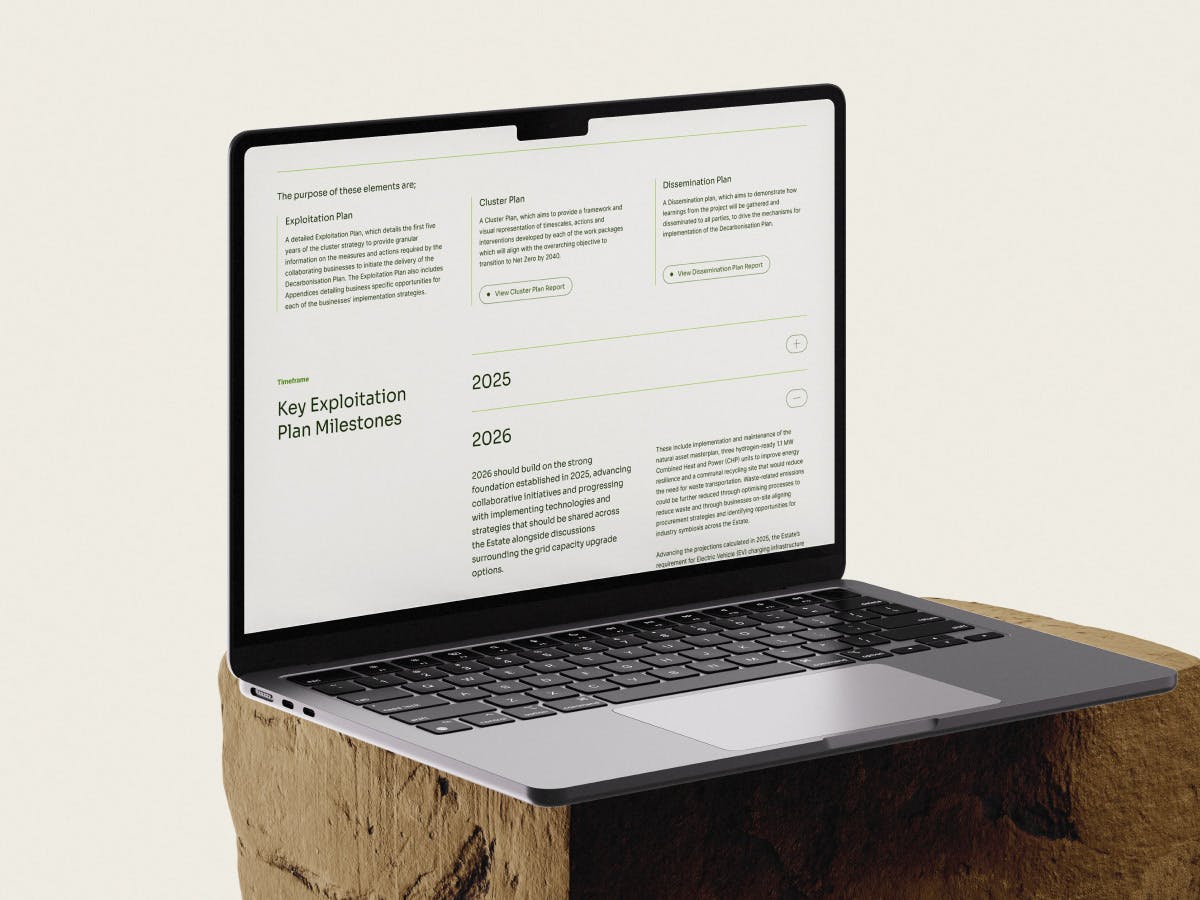
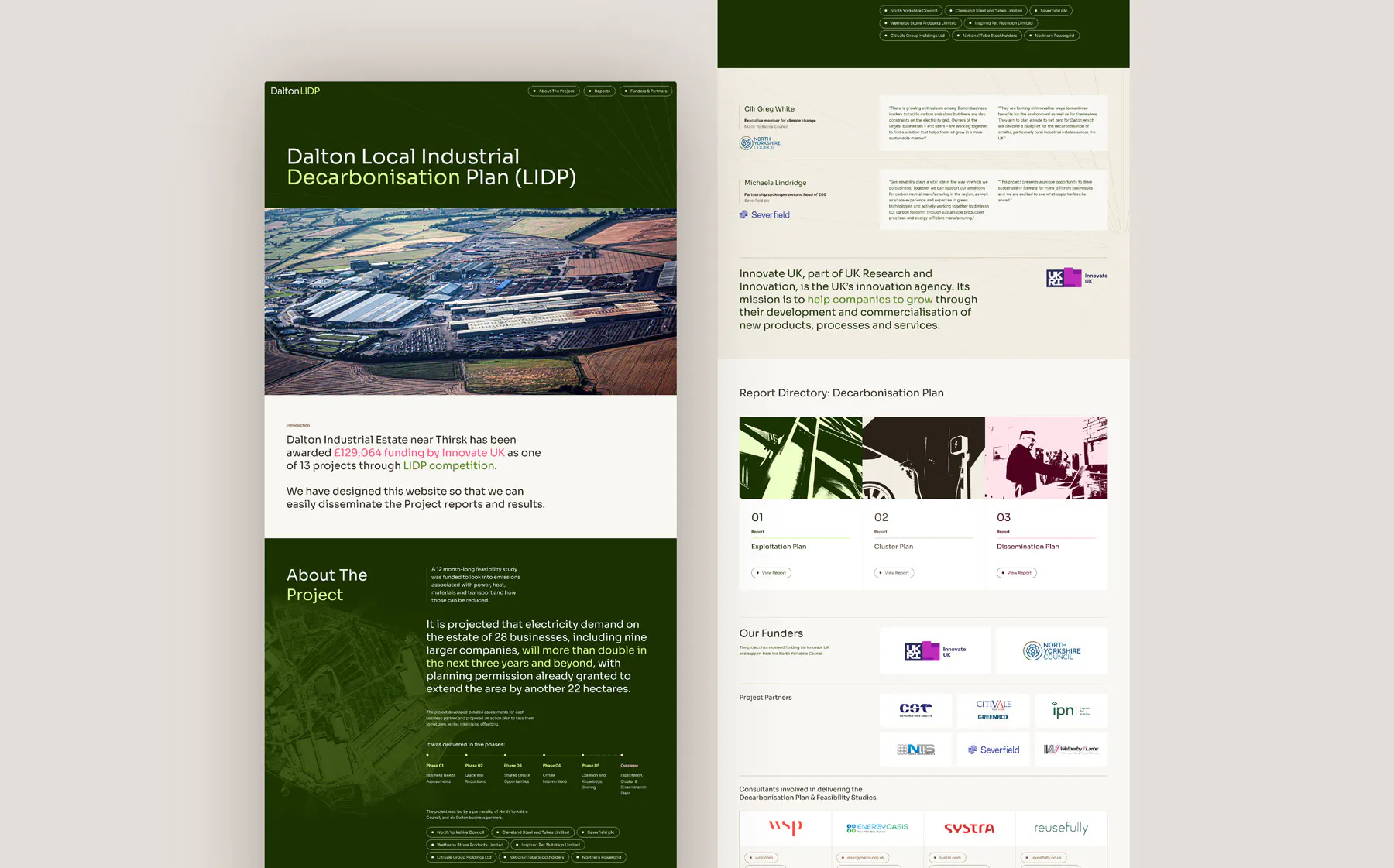
While working with Severfield PLC on their Dalton Local Industrial Decarbonisation Plan (LIDP), we asked a simple question: what if publishing the report was part of the decarbonisation strategy itself?
We’ve always known that digital is greener than paper, but it turns out not all digital formats are created equal. When we looked into the environmental impact of our reports, the data was eye-opening.
By publishing as a lightweight webpage instead of a traditional PDF, we reduced our immediate distribution footprint by around seven times (1.41 kg CO2e vs 9.73 kg CO2e per 1,000 recipients). This initial saving is based on the Sustainable Web Design (SWD) methodology, which calculates the energy required to transmit data across the globe.
The real impact, however, is what happens over time. When a PDF is emailed, it doesn't just "exist" once; it is copied and stored in thousands of individual inboxes and backup servers. According to International Energy Agency (IEA) data on data centre energy use, maintaining those files requires constant power for cooling and storage.
If those emails remain in inboxes for five years, the webpage approach becomes the clear winner—delivering over 99% lower total emissions (~1.41 kg CO2e compared to a staggering ~495 kg CO2e for the stored PDFs). By hosting our content on a single, efficient server rather than clogging up thousands of inboxes, we're ensuring our digital footprint stays as small as possible.
By transforming a complex, multi-part report into a fast, lightweight, and accessible digital experience, the project demonstrated how sustainable web design can both communicate and embody the path to Net Zero by 2040.
The problem
Many organisations still distribute reports as PDF attachments via email. It’s convenient, but it comes with a hidden carbon cost, from the initial data transfer through to years of storage across servers and backups.
We wanted to compare the environmental impact of emailing a PDF report to 1000 people versus hosting the same report as a lightweight webpage.
The numbers
The below numbers are used as averages of a report web page and a distributed multi-page PDF report.
Website (Visiting each page once)
Page size: 2816 KB (≈2.8 MB)
1000 visitors = ~1.41 kg CO₂e
Email with PDF
PDF size: 19388 KB (≈19.4 MB)
1000 emails = ~9.73 kg CO₂e
Sending the PDF alone is around 7 times more carbon intensive than serving the report as a webpage.
It might feel efficient, but it’s important to recognise that not every recipient opens or downloads email attachments. Research indicates that only around a quarter of attachments are ever accessed, meaning many distributed files are never used at all. This duplication compounds the environmental cost, as every recipient still receives a complete copy of the file whether it is read or not.
For larger organisations, there is a real opportunity to monitor this more accurately. Tracking how many reports are actually accessed versus distributed could provide valuable insight into data waste and potential carbon savings. Over time, this approach could even evolve into a measurable sustainability initiative.
The hidden cost of storage
Unlike a webpage, PDFs attached to emails are:
Stored on multiple servers (sender, recipient, and backup copies).
Retained for years, often indefinitely.
Replicated in backup cycles, multiplying their footprint.
98% of all email data is made up of attachments, according to research by Veritas Technologies. Sending large files that may never be opened creates unnecessary carbon emissions and storage waste.
In addition, emails with attachments are more likely to be flagged as spam, reducing deliverability and engagement.
Predictive estimate
When we think about carbon footprints, we usually think of exhaust pipes or factory smoke. But digital storage has a footprint, too. According to calculations based on the Sustainable Web Design (SWD) Model, storing just 1 GB of data in an average cloud data centre produces roughly 5 kg of CO₂e every single year.
This is why our move to a webpage-based report is so significant. If we had emailed 1,000 copies of a standard 19.4 MB PDF, it would have created nearly 20 GB of data sitting in inboxes and backup servers. Over five years, the cumulative energy needed to keep those files "alive" would reach roughly 485 kg of CO₂e.
By hosting our report as a lightweight webpage instead, we avoid that storage trap entirely. The total long-term footprint of a single webpage is more than 300 times lower than the cumulative cost of those stored PDFs. Based on International Energy Agency (IEA) data regarding server efficiency, choosing "web-first" is one of the most effective ways we can reduce our invisible digital waste.
The hosting factor
A common question is whether website hosting changes the picture.
The data transfer figures above already account for the energy used to serve the page.
The ongoing operational footprint of hosting is what varies – and while all hosting carries embodied carbon from servers, the choice of platform makes a big difference.
All our report websites are hosted on madeby.cloud, which is:
Certified by the Green Web Foundation.
Powered by 100% renewable energy.
Optimised for lightweight delivery.
This ensures operational emissions are minimised, and hosting aligns with best practice for sustainable digital infrastructure.
The solution
By publishing reports as optimised webpages on madeby.cloud instead of emailing PDFs, organisations can:
Cut the carbon footprint of distribution.
Avoid locking in long-term storage emissions.
Guarantee green hosting certified by the Green Web Foundation.
Provide an accessible, responsive, and trackable reading experience.
The impact
For every 1000 reports distributed:
Website (on madeby.cloud): ~1.41 kg CO₂e (with minimal operational footprint)
PDF by email (transfer + 5 years storage): ~495 kg CO₂e
The result is a webpage-first approach reduces carbon emissions by over 99%, while also improving usability and discoverability. Michaela Lindridge, Head of ESG at Severfield PLC said:
I really value madeby.studio’s sustainability-focused hosting and low data usage. When the opportunity came up to finally use madeby.studio to develop a website that was focused on decarbonisation, my choice was very clear. They not only understood our vision but elevated it with their technical expertise, creativity, and attention to detail. The end result was a sleek, responsive, and high-performing website that exceeded our expectations – and has all the sustainability credentials.
Additional Benefits
Updates and Version Control
Webpages can be updated instantly, ensuring that readers always access the latest version. PDFs, by contrast, are static and quickly become outdated; if any errors are sent through an emailed version, it’s impossible to recall.
Accessibility
PDFs remain largely inaccessible for many users. 75% of respondents in a WebAIM survey reported that PDFs are likely to cause significant accessibility issues. When built to recognised WCAG accessibility standards, webpages offer a more inclusive and sustainable format for sharing content. Unlike PDFs, which often present accessibility barriers, webpages follow established best practices and frameworks that make compliance easier to achieve and maintain. They are also more adaptable for assistive technologies and ongoing accessibility improvements.
Device Responsive
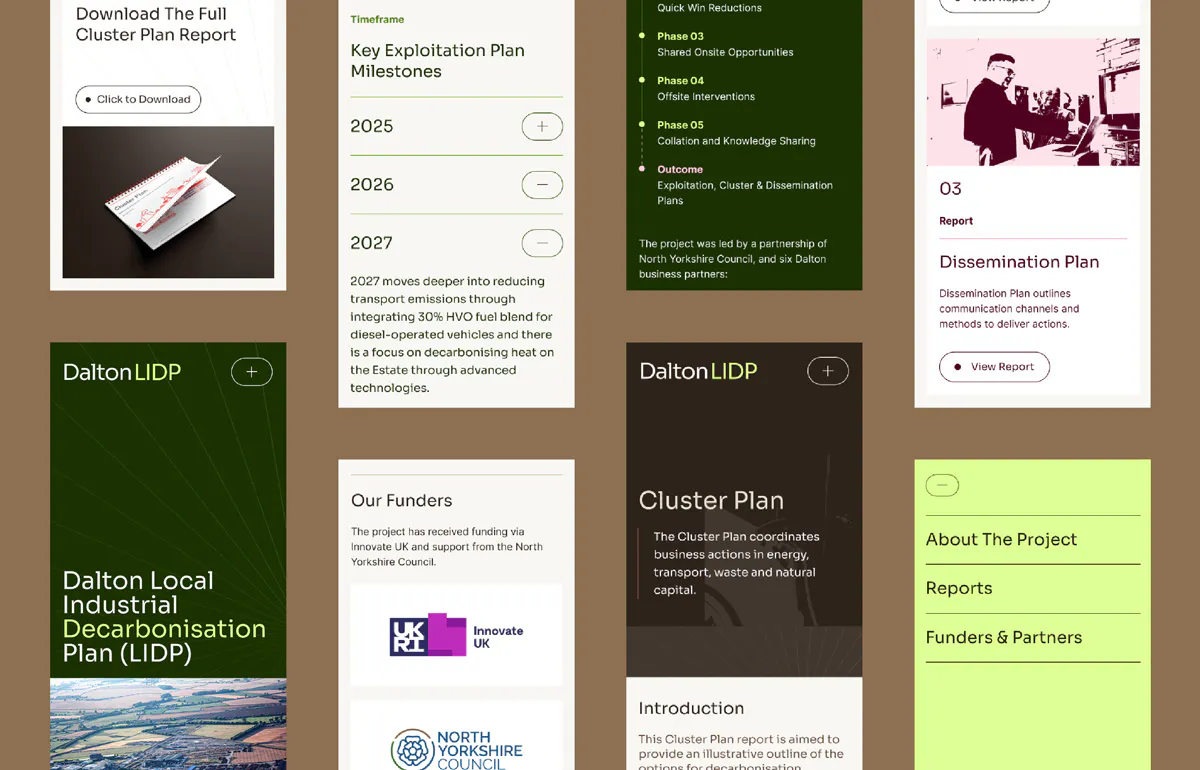
A web-first format also ensures the report remains fully responsive, adapting across devices. Unlike static PDFs normally designed for A4 paper, the webpage can be read comfortably on mobile, tablet or desktop, making the content more accessible.
The bigger picture
Sustainability isn’t only about what a report says, it’s about how it’s delivered.
Every email attachment, every stored file, every duplicated backup quietly adds to an organisation’s digital carbon footprint. Small distribution choices scale fast, especially across large teams and long timelines.
Moving from PDF-first to web-first is a simple shift with an outsized impact. It cuts emissions, improves accessibility, and gives teams visibility into how content is actually used, not just sent.
If you’re still emailing large reports, this is one of the easiest places to start reducing digital carbon.
If you’re still sending large reports as attachments, this is an easy place to start reducing digital carbon. We help teams turn heavy documents into fast, accessible, low-impact experiences, without losing rigour or design quality.
Drop us an email, give us a call or send us your brief when you're ready to get started.
Get in Touch