Sage 200 Integration: Your Website and Sage 200 Should Already be Talking
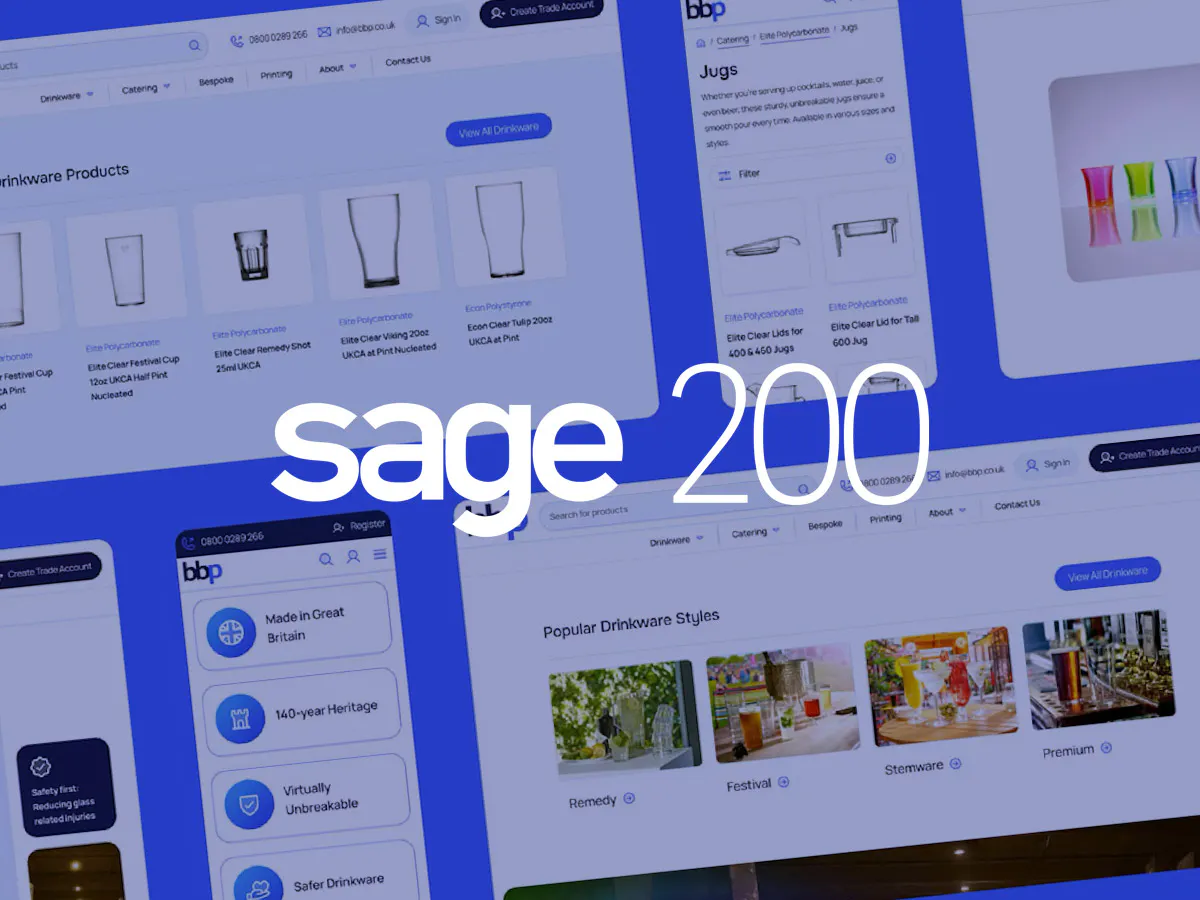
If your business runs on Sage 200, chances are your website doesn't fully know it yet. Pricing gets updated in Sage but not online. Stock levels drift out of sync. Customer-specific rates need manually applying to quotes. Someone, somewhere, is re-keying order data from one system into another.
That's not a website problem. It's an integration problem, and one of the most common, and most fixable, barriers between your website and it actually working as a commercial tool, not just a brochure.
What a Sage 200 website integration actually connects
"Integration" gets used loosely, so here's what a good Sage 200 integration should cover:
Pricing and price bands - including customer-specific and tiered pricing, kept live rather than exported on a schedule
Product and stock data - so what you show online reflects what's actually available
Customer account information - account tiers, credit terms, order history
Orders and quotes - pushed back into Sage automatically, removing duplicate entry
Get this right and your website becomes a genuine extension of Sage 200, not a separate system that happens to sit next to it.
Your options for connecting to Sage 200
You've got a few ways to connect a website to Sage 200, and the right one depends on how complex your buying process is.
Sage 200 API integration
Gives you a direct, bespoke connection to Sage's API. You get full control over what syncs, how often, and in which direction. Although it needs proper development work to get right, particularly around error handling and edge cases like part-shipped orders, credit holds, or pricing exceptions.
Middleware or connector tools
Map common fields between Sage and popular e-commerce platforms. They're faster to set up, but often more rigid. Fine for a straightforward catalogue, limiting if you run dynamic pricing or complex quoting.
Custom-built sync layer
Sits between your website and Sage 200, designed around your specific workflows rather than a generic template. It's more investment up front, but it scales with your business instead of working against it.
Ask yourself one question to work out which fits. How complex is your actual buying process? The more dynamic your pricing and the more bespoke your quoting, the stronger the case for a proper API-level integration over an off-the-shelf connector.
Case study: how BBP connected their website to Sage 200
BBP is a leading provider of catering disposables and packaging, running a large and constantly evolving product catalogue with quote-based transactions and dynamic, customer-specific pricing. Their previous website couldn't keep pace. The team manually reconciled pricing and product data, and the quoting process created friction for customers and extra work internally.
We rebuilt BBP's platform with a robust API integration into Sage 200, so pricing, product data, and customer account information sync in real time. Every quote generated through the website reflects accurate, customer-specific pricing automatically, with no manual checking and no duplicate entry.
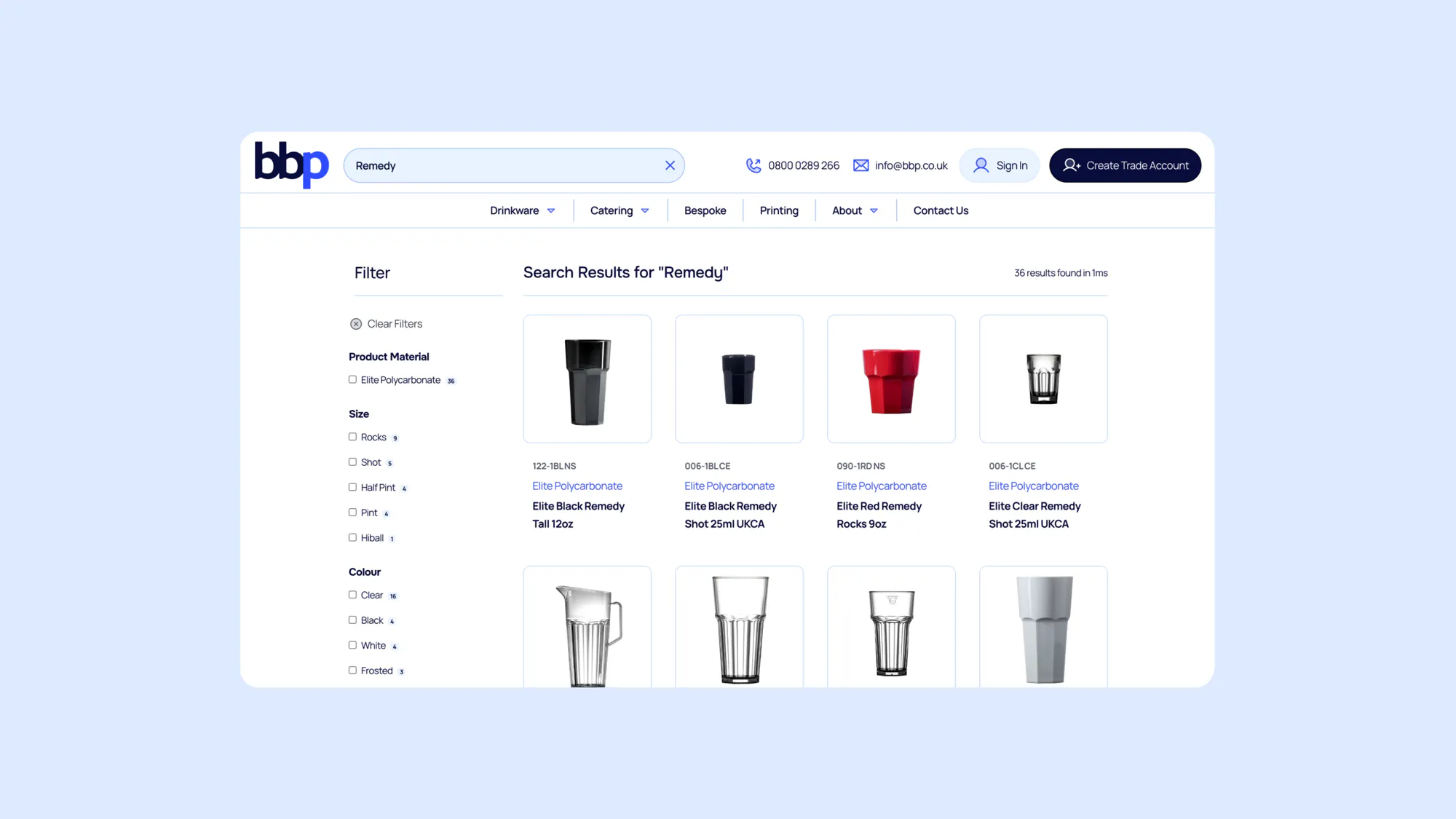
We also built a bespoke quoting flow for verified customers, supporting multi-product quotes, basket management, and automated confirmations, all fully synced with Sage 200. On top of that, we engineered a high-performance search system that returns results in as little as 1ms, even across a catalogue running into thousands of SKUs.
The results since launch:
1ms average product search response time
50.8% improvement in search engine ranking positions
21.3% increase in organic search impressions
100/100 SEO score and 99/100 performance score at launch
The Sage 200 integration wasn't an afterthought. It was the foundation enabled customers to receive accurate pricing, fast quoting and self-servicing of quotations.
Read the BBP Case StudyWhat good Sage 200 integration looks like
If you're scoping a Sage 200 integration for your own website, a few things separate the ones that hold up from the ones that quietly cause problems six months in:
Real-time sync over batch updates - wherever your business logic allows it, batch syncing (nightly, hourly) is often where pricing errors and stock discrepancies creep in
Proper error handling - what happens when a sync fails partway through, and does anyone get notified?
A clear source of truth - Sage should generally stay the master record for pricing and stock, with your website reflecting it rather than maintaining a parallel version
Room to scale - an integration built for today's product range and pricing structure should flex as both grow, without needing a rebuild
Bringing it together
Get your Sage 200 integration right, and your website starts doing things it couldn't before: accurate pricing without manual intervention, faster quoting, and fewer hours lost reconciling two systems that should already agree with each other.
Sage 200 isn't the only system we connect websites to. Next up, we're covering the same challenge for businesses running on NetSuite, including how we built a bespoke integration for Hooplr, covering everything from customer applications to operational workflows.
Thinking about integrating your website with Sage 200? Get in touch or take a look at our API and integrations services.